Description
Product Summary
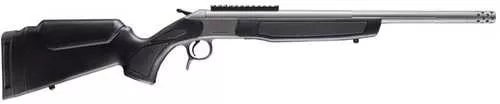
CVA Scout SS Takedown Single Shot Rifle 44 Magnum/44 Special 20″ Barrel 1Rd Capacity Black Synthetic Stock Matte Stainless Steel Finish
Manufacturer: Cva
FAMILY: Scout Series
MODEL: Scout SS Takedown
TYPE: Rifle
ACTION: Single Shot
CALIBER/GAUGE: 44 Magnum | 44 Special
FINISH: Matte Stainless
FINISH TYPE: Stainless Steel
STOCK: Synthetic Stock
STOCK/GRIPS: Black Synthetic
Barrel: 20″
Drilled / Tapped
RATE-OF-TWIST: 1-in-20″
Capacity: 1
THREAD PATTERN: 11/16×24
SPECIAL FEATURE: Threaded Barrel
WEIGHT: 6.5 lbs
SHIPPING WEIGHT: 8.55 lbs.
ADDL INFO: 0 MOA Durasight Rail Base
ADDL INFO: Reversible Hammer Spur
Caliber Dictionary
The Below Information Has Been Provided From Our Gun Caliber Dictionary And Is Meant For Informational Purposes Only. It Is Not Intended to Describe The Unique Specifications For This Ammunition.The 44 Remington Magnum (44 Magnum) was introduced by Remington and Smith & Wesson in 1955 in S&W’s large-frame Model 29 revolver. Much credit much be given to gunwriter Elmer Keith, who wanted a more powerful revolver cartridge for handgun hunting. Keith had been experimenting with heavy 44 Special handloads, using that cartridge because its brass was heavier than older blackpowder revolver cartridges. The 44 Magnum is essentially a 44 Special case lengthened to 1.285 inches, using the same .429-inch bullet diameter. For many years the world’s most powerful handgun cartridge, the 44 Magnum has been proven adequate for all North American big game. Although now surpassed by several big revolver cartridges the 44 Magnum remains a fine hunting cartridge with recoil levels at the limit that many handgunners can deal with. The most common bullet weight is 240 grains, but 44 Magnum loads are available up to 340 grains. The 44 Magnum is widely chambered to handguns and carbines. — Craig Boddington