Description
Product Summary
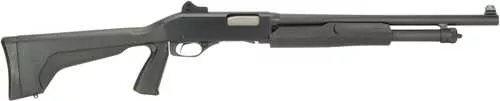
Stevens 320 Security Shotgun 20 Gauge 18.5″ Barrel 3″ Chamber Ghost Ring Sights 22439
The Stevens 320 shotguns are well-built imported models carefully selected for their performance and value and provide many features only found on more expensive models. The 320 Pump features a proven rotary bolt design and dual slide bars for reliable operation. The receiver is a bottom load with right eject. It is available in a wide selection of security configurations with ghost ring, rifle or bead sights.
Specifications:
– Action: Pump
– Gauge: 20 Gauge
– Barrel Length: 18.5″
– Capacity: 4+1 Rounds
– Finish: Blued Matte
– Stock: Black Synthetic
– Length: 38.25″
– Weight: 7 lbs
Caliber Dictionary
The Below Information Has Been Provided From Our Gun Caliber Dictionary And Is Meant For Informational Purposes Only. It Is Not Intended to Describe The Unique Specifications For This Ammunition.The 20-gauge follows the 12-gauge as America’s second-most popular shotgun gauge. And, with modern shotshells, continues to gain ground. The 20-gauge has a bore diameter of .615-inch, with modern shells in either 2 3/4 “standard” or 3-inch “magnum” length. Most modern shotguns are chambered to handle both. Payloads vary from light-recoiling 5/8-ounce loads all the way to heavy turkey loads carrying 1 5/16 ounces of shot. Standard 2 3/4″ loads for targets and upland birds are normally 7/8 or one ounce. At its very best the 20-gauge does not have the capability of a 12-gauge…but with modern shot, wad columns, and chokes it doesn’t give up much, and it can be built into a much lighter shotgun developing less recoil. Virtually all manufacturers offer 20-gauge guns, and they are available in all action types and for virtually all shotgunning sports. The 20-gauge joins the 12, 28, and .410 as one of four events in skeet competition, and is becoming increasingly popular for sporting clays. — Craig Boddington